Generator Rental for Construction Sites in Southern California: What You Need to Know
Not every construction project needs a temporary power pole. Short demolition jobs, quick pours, site prep work that wraps in a week — these are situations where going through the permit process and waiting two to three weeks for an energized pole does not make sense. A generator gets the site running the same day.
The mistake contractors make is renting a generator without thinking through sizing, fuel logistics, or when to switch to utility power as the project extends. This guide covers the practical side of construction generator rentals in Southern California, including how to size correctly, what the rental process looks like, and when a temporary power pole should replace the generator.
When a Generator Makes Sense on a Construction Site
A generator rental is the right call for construction projects when one or more of these conditions apply:
- The project runs fewer than four weeks and the cumulative fuel cost stays under what a temporary power pole installation would cost
- The site is remote with no utility lines within 100 feet, making a utility connection impractical without a multi-set installation
- Power is needed within days and there is no time to start the permit process
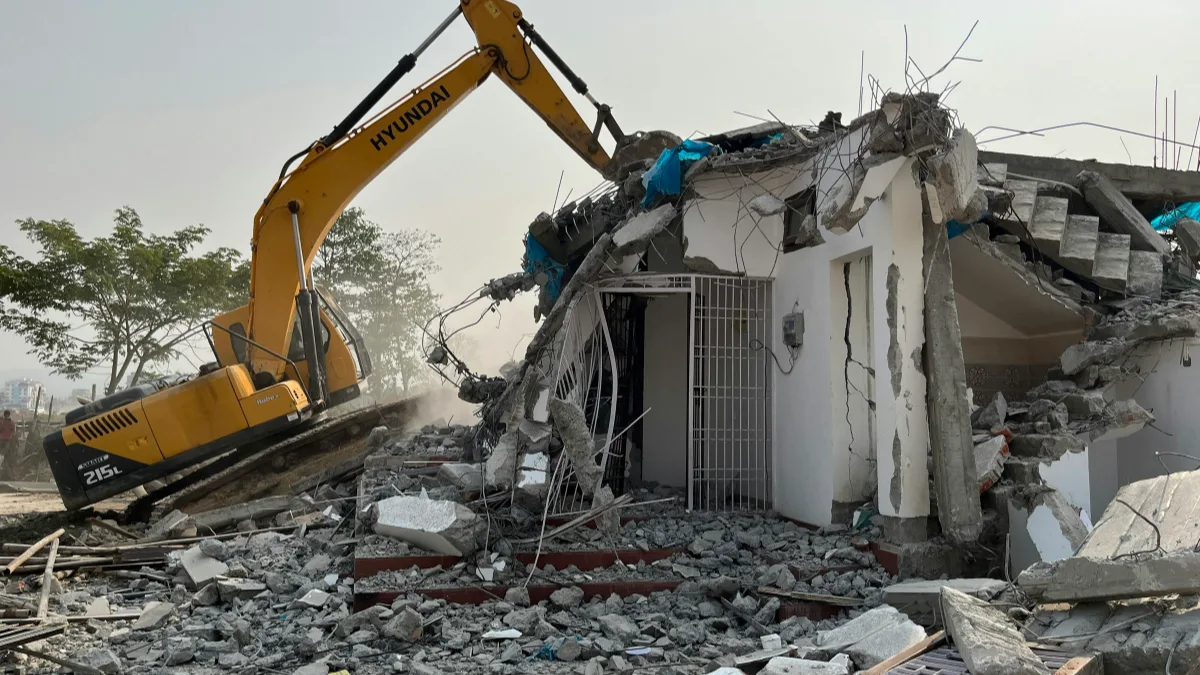
- The project is a short demolition where active power is only needed for a few days of equipment operation
- A specific piece of equipment on the site has a load requirement that exceeds the installed temporary power pole capacity, and a generator is needed as supplemental power
For projects where the decision is not clear, ACO’s post on generator rental vs. temporary power pole walks through a step-by-step decision framework.
How to Choose the Right Generator for Your Construction Site
Generator sizing on a construction site comes down to the total simultaneous electrical load. Undersizing causes trips and shutdowns. Oversizing wastes fuel budget.
- List all equipment that will draw power at the same time: power tools, lighting, compressors, welding equipment, job site trailer HVAC, battery chargers, and any other electrical loads.
- Total the running wattage. Check the nameplate on each piece of equipment for its running watt draw.
- Account for startup surge. Motors and compressors draw two to three times their running wattage at startup. Size the generator to handle the highest single startup surge without tripping.
- Add a 20 percent buffer above the total load. Running a generator consistently above 80 percent capacity shortens its service life and increases the risk of overload trips.
- Match to the right unit. ACO’s team can confirm the right generator size for your site load when you call with the equipment list.
Common Construction Site Generator Applications in Southern California
- Demolition crews running saws, compactors, and lighting on short-duration jobs
- Concrete and foundation pours where vibrators, pumps, and lighting need power for a few days
- Grading and site prep work before a temporary power pole can be installed
- Projects in remote or hillside locations in LA County where utility lines are not accessible
- Supplemental power alongside a temporary pole for equipment that exceeds the installed service
- Emergency power when a project’s temporary pole goes offline during utility maintenance
Fuel Management on the Job Site
Diesel consumption on a construction site generator depends on load and hours of operation. A 50kW generator running at 75 percent load burns roughly two to three gallons of diesel per hour. An eight-hour shift runs through 16 to 24 gallons. On a two-week project running five days a week, that is a significant line item in the budget.
Plan fuel deliveries in advance, particularly for projects in areas without easy fuel truck access. Running a generator dry mid-project stops work and can damage the unit. ACO can advise on fuel logistics when you book the rental.
Generator Placement on the Job Site
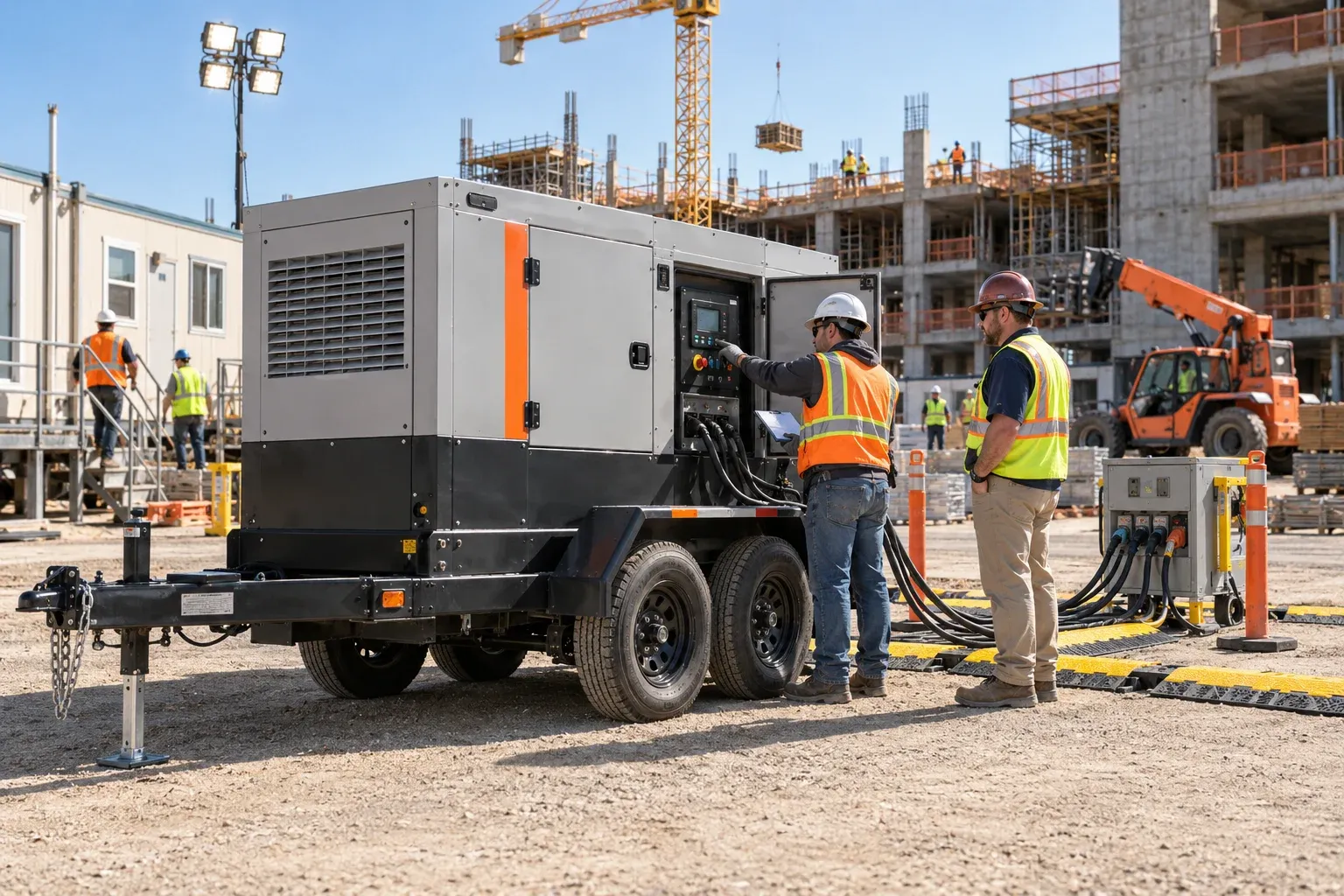
Placement affects both safety and performance. Position the generator:
- On level ground with adequate clearance on all sides for ventilation
- Away from areas where exhaust fumes can accumulate — downwind of the active work area where possible
- With enough cable reach to the main distribution point without overextending runs that can cause voltage drop
- Accessible for refueling without requiring work to stop or equipment to be moved
In urban Southern California job sites with limited space, generator placement sometimes requires coordination with neighboring properties or sidewalk access permits. For tight urban sites in LA, Culver City, or Santa Monica, mention the site constraints when booking so ACO can advise on placement options.
When to Switch from a Generator to a Temporary Power Pole
The most common scenario where contractors pay more than they need to: starting with a generator for speed, then keeping it running through a project that ends up lasting three or four months because no one started the temporary power pole permit process.
The fix is to start the temporary power pole application early, even if you are using a generator in the meantime. The two-to-three-week permit and installation timeline means you can begin with a generator and transition to utility power before the fuel cost accumulates significantly.
ACO can coordinate both. Start with a generator rental and ACO begins the permit process simultaneously. When the pole is energized, the generator comes off site. More on the permit process is in our post on how ACO handles the permit process so you don’t have to.
Frequently Asked Questions
How quickly can ACO deliver a generator to a construction site in Southern California?
Delivery timelines depend on unit availability and location. Call (818) 255-3560 for current availability. For planned projects with known start dates, booking a week or more in advance confirms the unit and delivery slot.
Does ACO service the generator during the rental period?
Contact ACO if the unit has any performance issues during the rental period. For extended rentals, fuel and basic maintenance logistics should be discussed when the rental is arranged.
Can I rent a generator for just one or two days?
Yes. Short-term rentals for single-day or two-day jobs are available. For demolition projects, concrete pours, or other short-duration construction work, this is often the most cost-effective approach.
What areas does ACO serve for generator rentals?
ACO serves construction sites across Los Angeles, Orange, Riverside, and Ventura counties, including the San Fernando Valley, Long Beach and the South Bay, Pasadena and the San Gabriel Valley, the Inland Empire, and Ventura County. Call to confirm availability for a specific project address.
Get a Free Estimate for Your Southern California Job Site
ACO has been providing generator rentals and temporary power solutions for construction sites across Southern California since 1989. Call (818) 255-3560 or request a free estimate online. Tell us the site address, the project type, and the power load, and we will confirm the right generator and availability.