
Temporary Power for Commercial Construction in LA: Ground-Up Builds and Shell Buildings
Commercial construction in Los Angeles moves fast when everything is lined up: permits approved, trades scheduled, materials staged. The first thing that goes sideways is usually power. Getting temporary electrical service established on a commercial ground-up site involves a more complex process than a residential build, and most GCs learn that the hard way when their project start date slips waiting on utility coordination.
ACO has been handling temporary power for commercial construction sites across Los Angeles since 1989. We work on ground-up builds from early foundation work through steel erection, MEP rough-in, and shell completion. We also handle the specific scenario where a shell building is complete but tenant improvement work hasn’t started. That is a window where power needs are different from both full construction and occupancy.
This post covers how temporary power works on commercial construction sites in LA, what makes ground-up and shell projects different from residential jobs, and what you need to know before your project starts.
How Temporary Power Works for Commercial Ground-Up Construction in LA
Temporary power for a commercial ground-up project in Los Angeles is established by coordinating a construction service connection with LADWP or SCE depending on your project location. This is different from a standard residential temp pole. Commercial projects typically require higher amperage, more service points across a larger footprint, and a utility review process that involves LADWP’s Large New Service group for projects above certain thresholds.
ACO handles this coordination end-to-end. We assess your project footprint, determine the right service configuration, pull the necessary permits, and coordinate with the utility provider on installation timing. For a breakdown of how the permit process works, see our dedicated post on how ACO manages permitting so your project doesn’t wait.
For commercial sites, the temporary power setup often needs to support crane operations, concrete pumping, steel erection tools, and MEP rough-in work simultaneously. Sizing the service for peak concurrent load, not average load, is the key difference between a setup that works and one that trips breakers.
Ground-Up Commercial Builds vs. Shell Buildings: Different Power Needs
Ground-up commercial construction and shell building projects look similar from the outside but have different temporary power requirements.
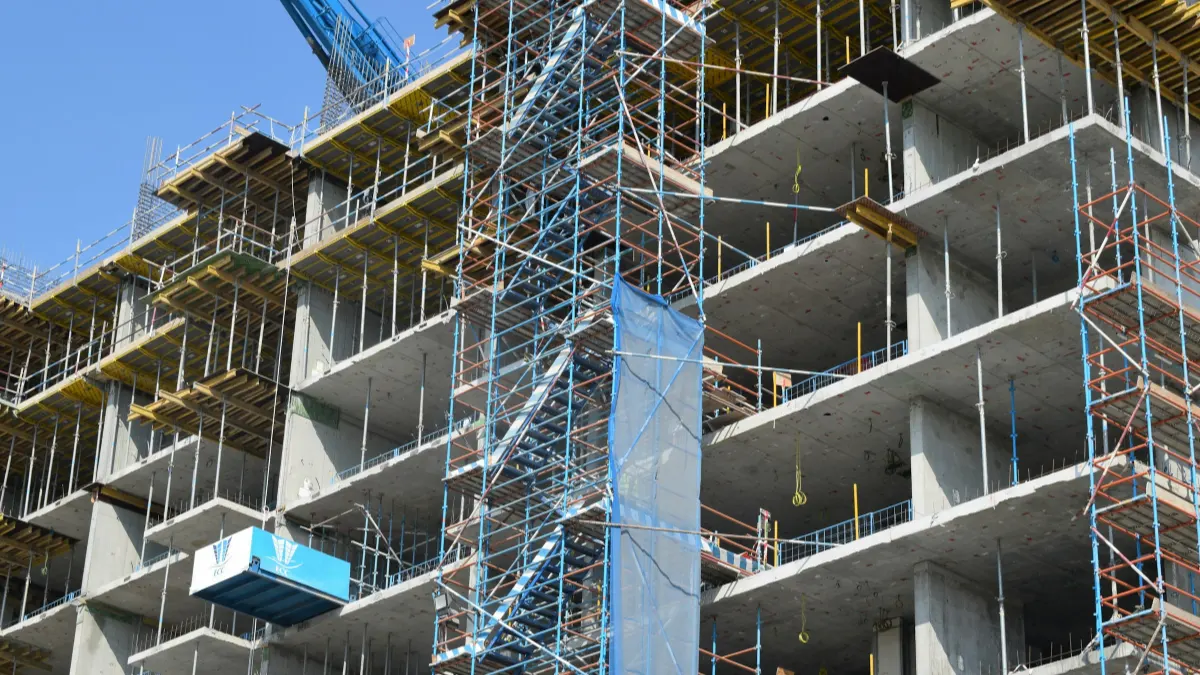
A ground-up build starts from bare dirt. Power needs begin at foundation work (concrete pumping, vibrators, curing lights) and increase steadily through steel and framing, MEP rough-in, and envelope work. The temporary service needs to scale with the project. ACO’s project design services ensure the power plan matches your construction phase sequence, not just day-one requirements.
A shell building is a completed structural envelope (roof, walls, windows, mechanical infrastructure) but with no interior fit-out. When a shell is delivered to a tenant for improvement, the building has base building systems but may not have active tenant electrical service established. Contractors doing TI work in a shell often need temporary power while the permanent electrical system is being designed, permitted, and installed.
ACO handles both scenarios. For shell-to-TI transitions, see our post on temporary power for commercial TI projects in Orange County for a parallel look at how this works in a different utility territory.
LA Commercial Projects Face a Two-Track Power Problem That Most Vendors Ignore
Here’s something specific to commercial construction in Los Angeles that most temporary power vendors don’t plan for: many large commercial projects have two separate power needs running simultaneously during certain phases.
During steel erection and MEP rough-in, you have high-amperage construction loads running off temporary service. At the same time, the project office trailer, security systems, and site cameras all need clean, stable power that construction load fluctuations can interfere with. Running both off the same temporary panel without isolation causes problems.
ACO recommends a split setup for large commercial projects: primary construction power on one panel, and a separate trailer connection or isolated circuit for site office and security loads. This isn’t something most single-service providers think about. It’s something experienced commercial construction power coordinators plan from day one.
LADWP Coordination for Commercial Projects in Los Angeles
Most commercial construction in the City of LA falls under LADWP’s jurisdiction. LADWP’s Large New Service process applies to projects above certain capacity thresholds and involves engineering review, longer coordination timelines, and potentially a dedicated LADWP project manager. This process can add weeks to your utility coordination timeline if you don’t account for it upfront.
ACO starts LADWP coordination as early in the preconstruction phase as possible. Waiting until permits are approved to initiate utility coordination is one of the most common mistakes on commercial projects, and one of the easiest to avoid by planning ahead.
For projects in areas served by SCE rather than LADWP, the process differs. Parts of LA County fall under SCE, including West Hollywood, Culver City, and some unincorporated areas. ACO works in both service territories and coordinates accordingly.
Underground vs. Overhead Power for Commercial Sites
Commercial construction sites often use underground temporary power systems rather than overhead poles. This is especially common on dense urban sites where overhead lines conflict with crane operations or site layout.
Underground systems run conduit from a utility vault to a distribution panel on-site. They require more planning and coordination with LADWP or SCE to establish the connection point, but they eliminate overhead congestion and are safer for sites with heavy equipment moving in the air.
For sites where overhead service is practical (smaller footprints, suburban locations, projects without crane interference), overhead systems get established faster and at lower cost. ACO recommends the right system based on your site conditions, not a default preference.
Frequently Asked Questions
How early should I contact ACO for a commercial ground-up project in LA?
As early as the preconstruction phase. LADWP coordination for commercial projects, especially larger ones that go through the Large New Service process, can take six to ten weeks or more. Starting after permits are approved is usually too late to avoid a construction start delay.
Does ACO handle temporary power for commercial projects outside the City of LA?
Yes. ACO serves commercial construction sites across Los Angeles County, including areas served by SCE, as well as Orange County, the Inland Empire, Ventura County, and Southwest Riverside County.
What amperage does a typical commercial ground-up project need for temporary power?
Most commercial ground-up projects require 400 to 800 amps of temporary service, sometimes more for larger structures. ACO sizes based on your peak concurrent load, not a standard package. We factor in crane, MEP, and site office loads from the start.
Can ACO provide both overhead and underground temporary power systems?
Yes. ACO installs both overhead and underground temporary systems depending on what your site requires. We assess the site and recommend the system that makes the most sense for your project layout and construction sequence.
What happens to temporary power during the transition to permanent service on a commercial project?
Temporary service stays active until permanent service is established and commissioned. ACO coordinates with your electrical sub and the utility provider to manage the transition so construction activity isn’t interrupted. The timing of this handoff matters especially on phased projects where some floors go live before others.
Ready to Plan Temporary Power for Your LA Commercial Project?
ACO brings three-plus decades of commercial construction power experience to every project in Los Angeles. We understand LADWP’s commercial service process, how to size a setup for a large site, and how to coordinate the utility timeline with your construction schedule. Contact ACO to discuss temporary power for your commercial ground-up build or shell building project in Los Angeles.