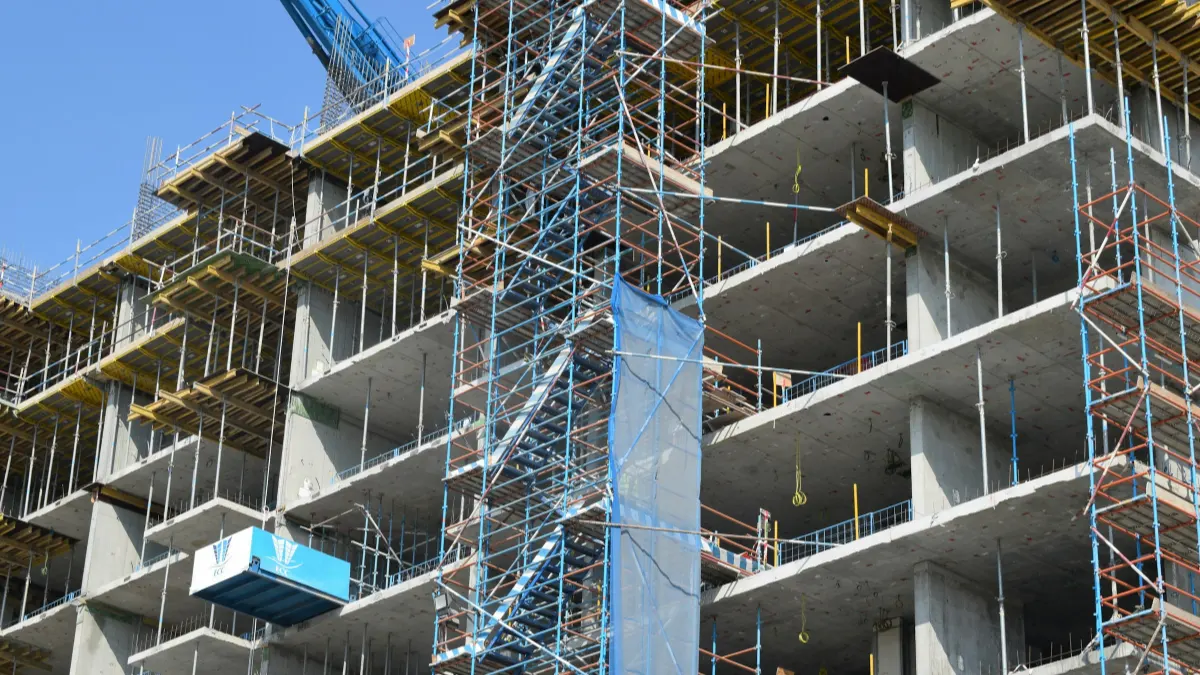

Temporary Power for New Construction in Temecula, Murrieta, and Menifee
Southwest Riverside County is building fast. Temecula, Murrieta, and Menifee added tens of thousands of new residents over the last five years, and the residential and commercial construction pipeline shows no signs of slowing. If you’re a builder, developer, or general contractor working in this corridor, you already know that getting a job site powered up is one of the first things that needs to happen and one of the easiest things to get wrong.
Temporary power in this region involves different utility providers than what contractors deal with in LA or Orange County. Instead of LADWP, your electrical service comes from Southern California Edison (SCE), and each city building department has its own permit requirements. Water and sewer connections run through local districts such as Eastern Municipal Water District (EMWD) and Rancho California Water District (RCWD). ACO has been coordinating with these agencies since 1989. We know the process, and we know what causes delays before the first nail goes in.
This post covers how temporary power works for new construction in Temecula, Murrieta, and Menifee: what the setup looks like, how permits work, and why working with a contractor who knows the Southwest Riverside County market matters more than most builders expect.
Why Temporary Power Is the First Call You Should Make
Temporary power needs to be on-site before most trades can start. Framing crews need power for tools. Concrete pumpers need lighting. Inspection phases require working outlets. If you don’t have temp service when the job starts, you’re burning time waiting.
In Temecula and Murrieta, the permit process goes through the city’s building department, not the county. Menifee has its own city building department too, with its own submittal requirements and review times. ACO handles permit pulling for all three jurisdictions. We file with the right agency from the start so there’s no back-and-forth after the fact.
One thing that surprises contractors new to this region: utility coordination here can take longer than in the LA metro. SCE service connections for new tracts involve scheduling that doesn’t always align with a tight build calendar. We factor that in when we plan your setup.
How ACO Sets Up Temporary Power for Your Temecula or Murrieta Job Site
Getting temporary power online at a Southwest Riverside County job site follows a consistent process. Here’s how ACO handles it:
- Site assessment: We review your lot, utility easements, and planned construction footprint to determine the best pole placement and service point.
- Permit application: We file for the temporary power permit with the City of Temecula, City of Murrieta, or City of Menifee, depending on your project location.
- Utility coordination: We work with the local utility provider to schedule meter installation and energization.
- Equipment installation: ACO installs the temporary power pole with the correct amperage for your project phase. Residential new construction typically starts at 100 or 200 amps.
- Inspection scheduling: We coordinate the required inspection before energization so the pole passes and power comes on without delays.
- Ongoing service: As your build progresses, ACO can adjust or relocate the service point if your site layout changes.
What Type of Temporary Power Does New Construction in This Region Need?
Most residential new construction in Temecula and Murrieta runs on overhead temporary power systems. That means a pole installed near the front of the lot connected to the utility line. This is the standard setup for single-family homes and smaller multi-unit builds.
For larger commercial projects or sites where overhead lines aren’t practical, underground systems are an option. ACO designs the system based on your site conditions, not a one-size approach.
If your project needs a supplemental power source before utility connection is established, generator rental can bridge the gap. ACO provides both temporary poles and generators, so you have options depending on where your project is in the process.
Menifee Builds Move Differently Than Temecula Builds
Here’s something that matters if you’re working across all three cities: each city runs its own building department, and the turnaround windows are different in each one. Menifee has also seen a surge in large tract developments that require multi-meter temporary power setups. That is more common there than in the custom-home-heavy Temecula wine country corridor.
If you’re managing a tract of homes in Menifee with a tight phase schedule, your temp power strategy needs to account for sequential energization across multiple lots. ACO has done this. We plan multi-lot setups to match your pour and frame schedule so you’re not waiting on power to move phases forward.
Generator vs. Temporary Pole for Temecula and Murrieta Construction
Some builders in this region default to generators because they’ve worked in areas where utility connections are slow. That’s understandable, but a temporary pole is almost always more cost-effective for a build that runs longer than a few weeks. See our breakdown on temporary power pole vs. generator for a direct comparison.
Generators make sense for short-duration work, remote sites, or situations where a utility connection isn’t feasible. For new construction in an established grid area like Temecula or Murrieta, a proper temporary power pole is the better long-term setup.
Frequently Asked Questions
Does ACO pull permits for Temecula, Murrieta, and Menifee?
Yes. ACO handles permit pulling for all three cities. Each of the three cities runs its own building department. We know which forms, fees, and timelines apply to each jurisdiction.
How long does it take to get temporary power set up in Southwest Riverside County?
Timeline depends on permit approval speed and utility scheduling. In most cases, from application to energization, you’re looking at two to four weeks. ACO starts the process as early as possible to avoid holding up your build schedule.
Can ACO handle multi-lot temporary power for a tract development in Menifee?
Yes. ACO coordinates sequential multi-lot setups for tract builders. We plan the phasing to match your construction schedule so each lot is powered when framing begins.
What utility provider handles new construction in Temecula?
Most of Temecula and Murrieta is served by Southern California Edison for electrical. Menifee also falls under SCE for electricity in most areas. ACO coordinates with SCE for meter installation and energization as part of our standard service.
How much amperage does new construction in this region typically need?
Most residential new construction starts with a 100 or 200 amp temporary service. Larger commercial or multi-family projects may require 400 amps or higher. ACO sizes the service based on your project scope, not a default assumption.
Ready to Power Your Temecula, Murrieta, or Menifee Job Site?
ACO has been setting up construction power across Southern California since 1989. We know the permit offices, the utility timelines, and the site conditions that affect your build schedule in Southwest Riverside County. Contact ACO to get a quote for your new construction project in Temecula, Murrieta, or Menifee.