Generator Rental vs. Temporary Power Pole: Which One Does Your Job Site Actually Need?
Contractors reach for a generator out of habit. It is fast to set up, requires no permits, and gets a site running the same day. That simplicity makes sense for the right job. For the wrong job, it turns into a recurring cost that outpaces what a temporary power pole would have cost from the start.
The decision is not complicated once you know what to look for. Here is a clear breakdown of when each option makes sense, what drives the cost difference, and how to make the call before you commit to either.
What Each Option Actually Is
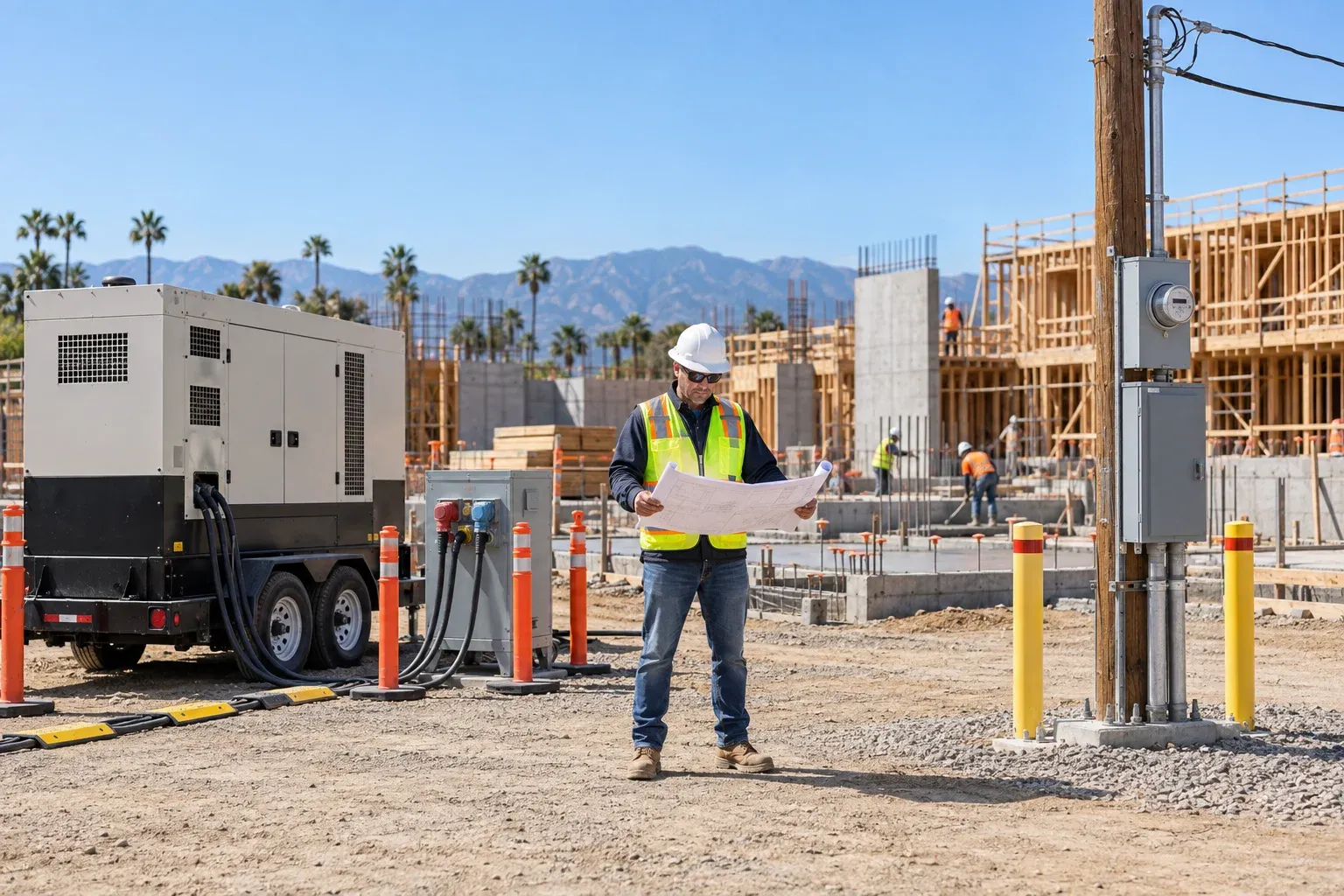
A temporary power pole connects to the utility grid through Southern California Edison or LADWP. Once installed and energized, it functions like permanent power: consistent voltage, no fuel to manage, no equipment to maintain. It requires a permit, a utility application, and a two-to-three-week lead time.
A generator rental produces its own power by burning diesel or gas. No utility connection, no permit, and it can be running within hours of delivery. The tradeoff is ongoing fuel cost, maintenance, and the risk of downtime if the equipment fails.
How to Decide: Generator or Temporary Power Pole
Use this as your starting filter:
- How long is the project? Under four weeks: generator is likely the right call. Over four weeks: run the cost comparison — a temporary power pole almost always wins on longer jobs.
- Is utility infrastructure accessible at the site? If there are utility lines within 100 feet of the site, a temporary power pole is viable. If the site is remote with no nearby lines, a generator may be the only option.
- How much load does the site require? High simultaneous draw — multiple power tools, lighting, HVAC in a job trailer — is more reliably handled by utility-fed power than by a generator under sustained heavy load.
- Does noise or emissions matter? Residential neighborhoods, sites near schools, or densely built urban areas have real constraints on generator use. A temporary power pole eliminates both issues.
- Do you need power within the next week? If the timeline is urgent and permits cannot be pulled in time, start with a generator and transition to a temporary power pole once the permit is processed.
The Real Cost Comparison
Generator rental rates look affordable on day one. A mid-size unit for a construction site runs roughly $150 to $300 per day in Southern California, depending on size and the rental company. Add diesel at current prices for a unit running full shifts, factor in the fuel delivery schedule, and the weekly cost adds up faster than most project managers expect when they write the initial budget.
A temporary power pole has a higher upfront cost covering installation, permits, and utility fees. After that, the monthly rental is a fixed number. On a 90-day project, the math consistently favors the pole by the time you account for cumulative fuel cost on the generator side.
The cost variable that is hardest to plan around with generators is downtime. A generator that fails requires a service call or a replacement unit. That is lost crew hours on a job with a schedule. Utility-fed temporary power does not have that variable.
When a Generator Is the Right Answer
- The project runs fewer than four weeks and the site has no nearby utility infrastructure
- You need power on site within days and there is no time for the permit process
- The site is in a remote location more than 100 feet from any utility source and a multi-set installation is not practical
- You need supplemental power for a specific piece of equipment that exceeds the temporary pole’s installed capacity
- Short demolition or excavation work where the active power period is measured in days
When a Temporary Power Pole Is the Right Answer
- The project runs more than four weeks
- Utility lines are accessible within 100 feet of the site
- The site is in a residential neighborhood or near noise-sensitive properties
- You need consistent load capacity for multiple simultaneous power draws
- The project has a job site trailer that needs power. ACO’s trailer connection serviceruns directly from the pole to the trailer panel.
- The project runs overnight and needs automatic site lighting. Dusk-to-dawn lighting systemsconnect directly to the temporary power pole.
Using Both on the Same Project
Some projects use both. A temporary power pole as the primary source for the full project duration, with a generator on site for a specific piece of equipment that needs more load than the pole’s installed service provides, or as emergency backup during utility outages.
ACO offers both temporary power pole rentals and generator rentals across Southern California. If your project needs both, our team can design a setup that covers the full scope.
Frequently Asked Questions
How much does it cost to rent a temporary power pole vs. a generator in Southern California?
A temporary power pole installation in Southern California includes installation, permit fees, utility connection fees, and a monthly rental. The total upfront cost varies by city, utility, and system type. A generator rental runs roughly $150 to $300 per day for a mid-size unit, plus fuel. On jobs longer than four weeks, the pole is usually cheaper in total.
Can I switch from a generator to a temporary power pole mid-project?
Yes. Some projects start with a generator while the temporary power pole permit is being processed, then switch to utility power once the pole is energized. ACO can coordinate this transition. Start the permit process as early as possible to minimize the overlap period.
How fast can ACO install a temporary power pole?
The full process from permit application to energized pole takes two to three weeks in most Southern California cities. The permit timeline depends on the city and which utility serves the site. For a detailed walkthrough, see what to expect when you rent a temporary power pole in Los Angeles.
Talk to ACO Before You Commit
ACO has been helping Southern California contractors choose the right power setup since 1989. If you are not sure which option fits your project, call (818) 255-3560 or request a free estimate online. Tell us the project address, the duration, and what you need to power. We will give you a straight answer.