Step-by-Step Guide: Temporary Construction Site Power
How to Keep the Temporary Power Process on Track
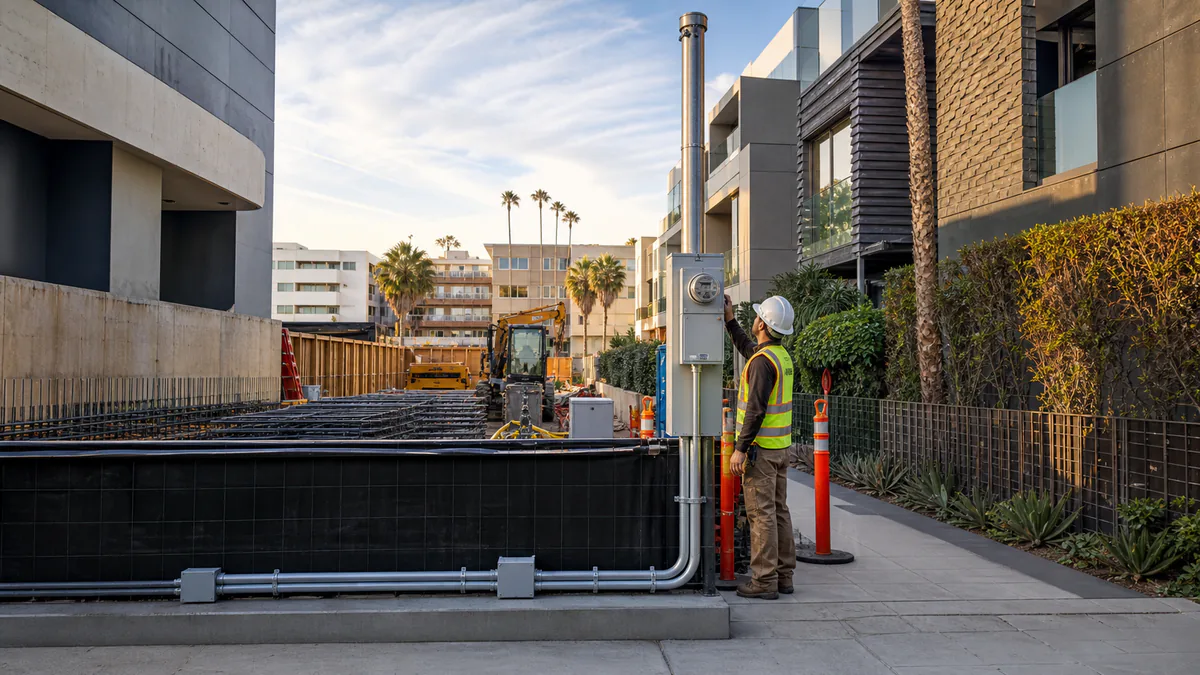
Getting a temporary power pole installed without delays comes down to having the right things in place before the process starts. Here is what contractors need to know.
Start with the Building Permit
Most cities require an active building permit before their inspectors will release the temporary power pole to the utility provider. This is the step that catches contractors off guard most often. If the building permit is not in place when the temporary power application is submitted, the process stalls at inspection regardless of how smoothly everything else has gone.
Get the building permit first. Once it is issued, the temporary power process can move forward without that obstacle.
Know Which Utility Serves Your Site
Southern California has two primary utility providers, and each has a different process for temporary power.
- Southern California Edison (SCE) requires a meter spot before the pole is installed. A service planner is assigned to the project and meets with the general contractor on site to agree on the pole location. The contractor is responsible for marking that location clearly before the installation crew arrives. If the location is not marked when the crew shows up, the installation is delayed.
- Los Angeles Department of Water and Power (LADWP) only requires meter spots on underground sources, which simplifies the process on overhead installations in LADWP territory.
Check your water and power bill to confirm which utility services your address. Submitting an application to the wrong provider sends the process in the wrong direction and adds time.
City and County Code Requirements
Every city has its own Building and Safety department with specific requirements for temporary power inspections. What satisfies an inspector in one city is not necessarily what another city requires. Working with a temporary power company that has direct experience with the local departments in your area is the most reliable way to pass inspection the first time and avoid fees or shutdowns.
ACO installs all equipment to meet the specific requirements of the city where the job is located. We coordinate directly with Building and Safety and with the utility provider through every step, from permit application to energization.
Once the Meter Spot Is Confirmed
After the appropriate meter spots are completed and permits are in order, installation can proceed. A clean installation that meets city requirements passes inspection without corrections, and a passed inspection is what moves the file to the utility for energization.
Every delay in the temporary power process traces back to one of a few things: no building permit, wrong utility district, unmarked pole location, or an installation that does not meet city code. Getting those details right from the start is what keeps a construction project on schedule.
Questions about your project? Call ACO at 818-255-3560 or request a free estimate online.