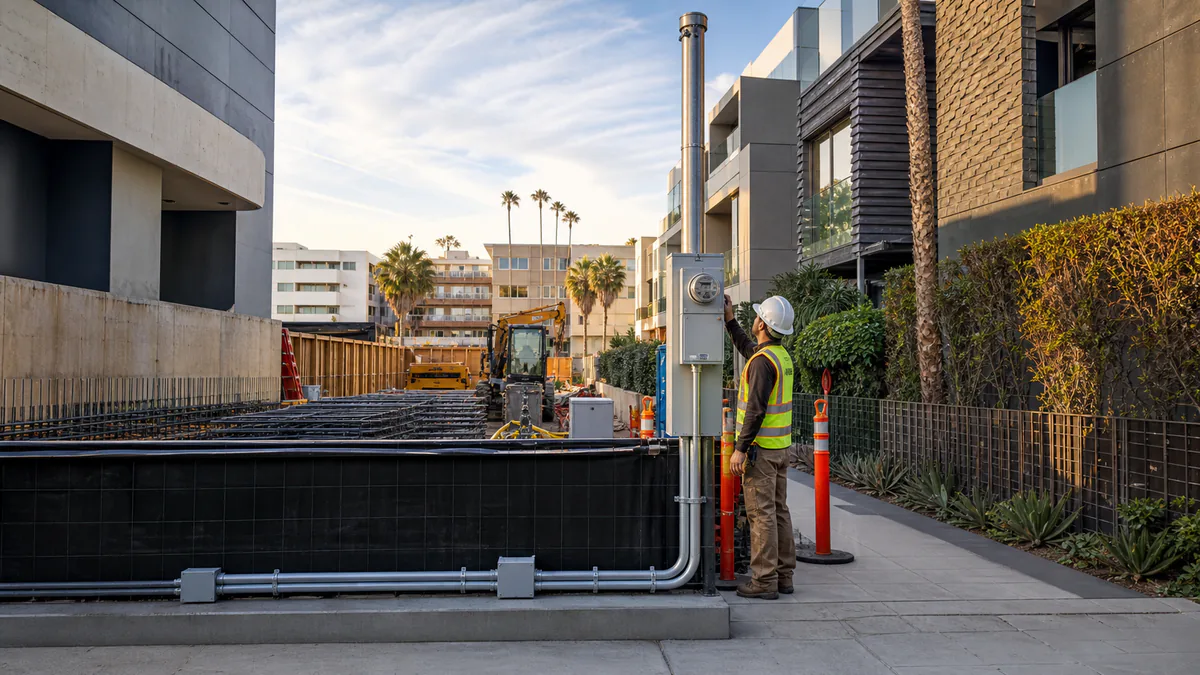

What to Expect When You Rent a Temporary Power Pole in Los Angeles
Renting a temporary power pole in Los Angeles is not complicated, but it involves more moving parts than most contractors expect the first time. There are two utility providers, multiple permit agencies, city-specific inspection requirements, and utility timelines that are entirely outside your control. Knowing what the process looks like from start to finish helps you plan around it rather than react to it.
This is a straightforward walkthrough of what happens when you work with A-CO on a temporary power pole rental in Los Angeles, from the first call through energization.
Step 1: The Initial Call and Load Assessment
Before anything gets ordered or submitted, A-CO needs to understand the job. That starts with a conversation about your project.
What we cover on that call:
- Project location and what city or utility district you are in (LADWP or SCE territory)
- Type of construction and how long the project runs
- Power requirements: what equipment is running, how many circuits you need, whether you need a trailer connection or lighting
- Site layout and where utility access is available
If the project has unusual requirements, like a site building property line to property line, a remote location, or power that needs to travel more than 100 feet from the source, A-CO will often do a job walk before finalizing the design. That meeting with your project superintendent helps us recommend a layout that is both practical and cost-effective.
A-CO’s estimators are experienced with project design and will review your plans to determine load requirements and identify available power sources before any work begins.
Step 2: Determining Which Utility Serves Your Site
Los Angeles has two utility providers and which one covers your site determines the entire permit and application process.
Southern California Edison (SCE) serves most of LA County outside the city of Los Angeles proper. LADWP serves the City of Los Angeles. One of the first things A-CO confirms is which utility has jurisdiction over your site. You can check your water and power bill to see who services your address, but our team handles this verification as part of the intake process.
This distinction matters because SCE and LADWP have different application requirements, different timelines, and different processes for meter spot approval. SCE requires a meter spot before we install the pole and assigns a service planner who meets with the general contractor on site to agree on pole placement. LADWP only requires meter spots on underground sources.
Getting this wrong means delays. Getting it right from the start keeps the job moving.
Step 3: Permit Pulling
A temporary power pole installation in Los Angeles requires permits. No exceptions.
The standard requirements include:
- A City Building and Safety Temporary Power permit
- SCE or LADWP utility application and approval, depending on your service area
- In some cities, additional local requirements on top of the standard city permit
A-CO’s permit pulling service handles all of this. Our permit expeditors know the Building and Safety requirements for each city in our service area and the specific utility application processes for both SCE and LADWP. We submit the applications, track the status, follow up with the utility when there are delays, and keep you informed.
One thing that slows jobs down significantly: the customer not having an active building permit before requesting temporary power. Most cities require a building permit to be on file before city inspectors will release the temporary power pole to the utility provider. If your building permit is not in place, the energization process cannot complete regardless of how fast everything else moves. A-CO will flag this early so it does not become a problem mid-process.
Step 4: Installation
Once permits are approved and the utility application is in process, A-CO installs the equipment. The right installation type depends on your site layout and what utility infrastructure is available nearby.
Overhead systems: The most common setup. Works when utility lines are accessible and there is clearance for the pole and wire run. A standard rental pole is a 6x6x24-foot treated wood pole.
Underground systems: Used in areas where overhead lines are not available or not practical. Many newer developments in LA have underground power sources. Underground installations cost more than overhead but are necessary on those sites.
Black diamond poles: Required when more clearance is needed than a standard pole provides. These are round poles, 8 to 10 inches in diameter, available in 25, 30, and 35-foot heights. They require full truck access and cannot be hand-installed.
Multi-set systems: Required when the power source is more than 100 feet from where power is needed. The utility will only span overhead wire up to 100 feet, so longer runs require additional poles installed at intervals. A project with a construction trailer 600 feet from the utility source, for example, would need a meter pole near the utility and additional poles installed every 80 feet to reach the trailer. A-CO installs single and multi-set systems sized to the job.
The pole placement should be clearly marked before the A-CO crew arrives on site. If the location is not marked when the crew shows up, the installation gets delayed. The utility service planner for SCE jobs will have agreed on a location at the on-site meeting, so that should already be documented before install day.
Step 5: Inspection and Energization
After installation, the pole has to pass a city inspection before the utility will energize it. A-CO schedules the inspection and makes sure the installation meets the specific requirements for that city before the inspector arrives.
Once the inspection passes, the file goes to the utility provider for connection. The utility’s timeline is outside anyone’s control, but A-CO follows up as needed to keep things moving. We stay on the job through energization so you are not making calls to find out where things stand.
When the utility energizes the pole, you have power on site.
Step 6: Add-Ons That Go In During or After Installation
Depending on your project, there are additional services that connect to the temporary power pole:
- Trailer connections: If you have a job site office trailer, A-CO runs the connection directly from the pole to the trailer panel. That covers your HVAC, lighting, and anything else running inside. More on trailer connections here.
- Lighting systems: A-CO installs mercury vapor lighting systemsthat operate automatically from dusk to dawn. Useful for site security and required on some jobs for safety compliance.
- Spider boxes and temporary power cords: For distributing power around the site from the pole.
- Piggyback power meters: For situations where you need to tap into an existing meter.
What Can Slow the Process Down
Most delays in temporary power come from a few predictable sources:
- Building permit not in place when the application is submitted
- Pole placement not marked on the day of installation
- Utility backlog, particularly with SCE for transformer installations on underground sources
- Incorrect utility district identified, which sends applications to the wrong agency
- Projects in newly developed areas where underground infrastructure is not yet complete
A-CO flags most of these before they become delays. But the customer-side items, like having a building permit ready and marking the pole location, are things you need to have in order on your end.
The Rental Period
Temporary power poles are rented, not purchased. You pay for the installation, the monthly rental, and the removal at the end of the project. The rental period runs from installation through final takedown.
If the project timeline changes, contact A-CO. Extensions are straightforward to arrange, and pulling the pole early if the project finishes ahead of schedule is not a problem. What you want to avoid is leaving a pole on site past its permit expiration without coordinating with A-CO, as that can create compliance issues.
Ready to Get Started
A-CO has been handling temporary power in Los Angeles and across Southern California since 1989. If you have a project coming up and want to know what the setup looks like for your specific site, call us at (818) 255-3560 or request a free estimate online. Our estimators will walk through the requirements with you and handle the process from permit to power.