Temporary Power for Multi-Family and Apartment Construction in Los Angeles
Multi-family construction in Los Angeles is a different beast than a single-family build. You’re not running one pole for one address. You’re coordinating power across multiple floors, multiple units, and a construction schedule that involves concrete, framing, mechanical, and electrical trades all working simultaneously. Getting temporary power right at the start of a multi-family project is not optional. It sets the pace for every trade behind it.
ACO has handled temporary power for apartment buildings, mixed-use projects, and multi-unit residential developments across LA County. We understand how LADWP handles multi-unit service coordination, how to stage power across a large footprint, and how to plan for the phased energization that multi-family lease-up schedules require.
This post covers what makes multi-family temporary power different, how ACO sets it up, and the specific factors LA developers and GCs need to know before breaking ground.
How Temporary Power Works on a Multi-Family Construction Site
Temporary power for multi-family construction in Los Angeles involves establishing one or more temporary electrical service points that supply power across the entire construction footprint. For smaller projects of 4 to 12 units, a single temporary pole with sufficient amperage may cover the site. For larger developments, multiple service points or a temporary transformer setup may be required.
The service point is coordinated with LADWP, which manages utility connections for most of the City of LA. ACO handles permit pulling and utility coordination so the process moves on a schedule that aligns with your build calendar. Delays in utility coordination are the most common cause of project start delays on multi-family sites. Starting that process early is the single most important thing you can do.
Once the temporary service is energized, it needs to support tools, lighting, hoists, and eventually the rough-in phase where permanent electrical work begins and temporary service has to be managed carefully alongside active wiring.
Power Requirements by Multi-Family Project Type
Not all multi-family projects have the same power demand. Here’s how ACO thinks about it by project type:
Small multi-family (2 to 8 units, two to three stories): A single 200 or 400 amp temporary service typically covers this footprint. Power is centrally located and distributed by the electrical sub.
Mid-size apartment building (20 to 60 units, four to five stories): These projects usually need a 400 to 800 amp temporary service, sometimes split across two panels depending on the building footprint. Crane and hoist loads need to be factored into the sizing.
Large podium or 5-over-1 mixed-use development (100+ units, six or more stories): These are the projects that require detailed project design services before a single panel goes in the ground. Power staging, transformer placement, and sequential energization planning all need to happen in coordination with the GC’s construction schedule.
LA’s 5-Over-1 Boom Has Created a Power Coordination Problem Most Temp Power Vendors Can’t Handle
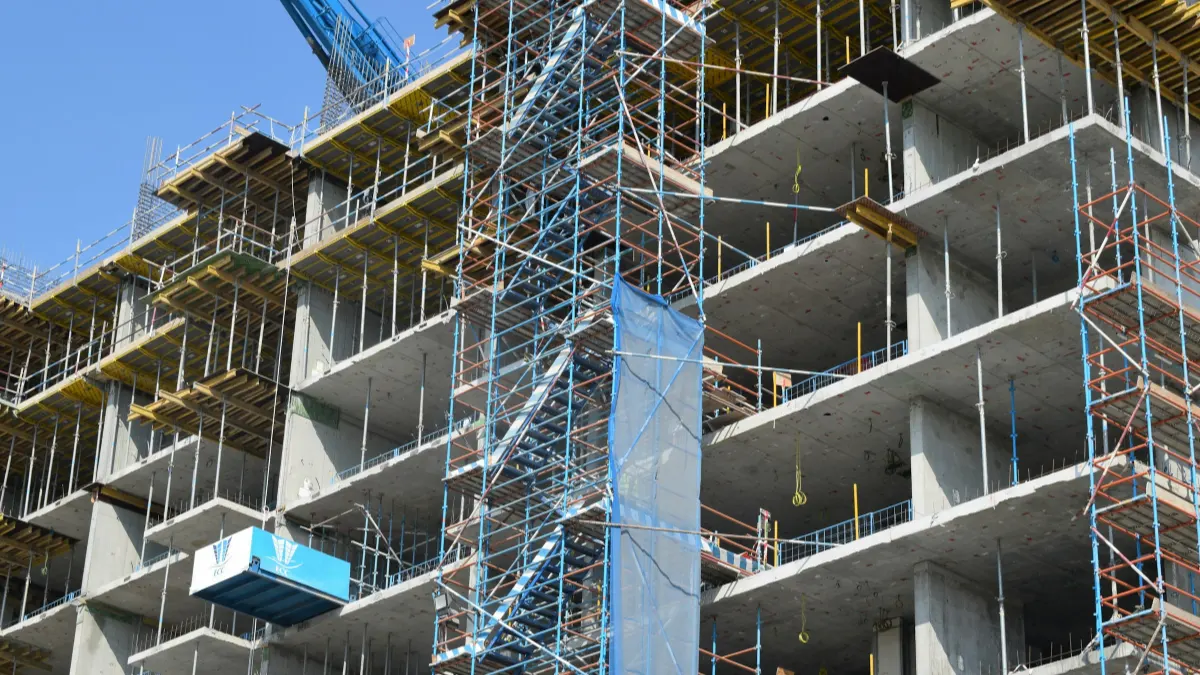
Los Angeles has seen a wave of 5-over-1 podium construction: five stories of wood-frame residential over a concrete podium, often with ground-floor retail or parking. These projects are everywhere in Silver Lake, Echo Park, Koreatown, and the Valley.
What’s specific to this project type: the concrete podium phase has different power demands than the wood-frame phase above it. Concrete pours require continuous vibrator operation, pump truck power, and curing lighting, all at the same time. Then the framing phase shifts to a distributed tool load across five floors simultaneously.
ACO has planned power setups for this exact scenario. The approach isn’t one panel that covers everything. It’s a staged design that addresses what each phase of the build actually draws, not just peak capacity on paper. This is something most generic generator rental companies and regional electrical contractors don’t do well.
LADWP Coordination for Multi-Family Projects
LADWP handles multi-unit temporary service requests differently than single-family residential. For larger projects, you may need to work through LADWP’s Large New Service group, which has longer coordination timelines than standard residential temp service.
ACO understands these LADWP workflows. Understanding how LADWP handles large service connections matters before you set your construction start date. We coordinate with LADWP on your behalf so you’re not navigating that process while managing the rest of your project.
For projects in areas served by SCE rather than LADWP (parts of the LA metro where SCE holds the franchise), the coordination process differs. ACO works in both service territories.
Phased Energization for Multi-Family Projects
One of the things that distinguishes multi-family construction power from a standard temp pole setup is phased energization: turning on power in stages as the building comes online for lease-up or TCO inspections.
The temporary service needs to remain operational and compliant through the phase when permanent service is being established but the building isn’t fully complete. Managing that transition from temporary to permanent without disrupting active construction trades requires coordination between ACO, the electrical sub, and LADWP.
ACO plans for this from the start. The temporary service is set up with the transition in mind, not as an afterthought. For a detailed look at how this process unfolds on a construction site, see our post on what to expect when you rent a temporary power pole in Los Angeles.
Frequently Asked Questions
How many temporary power connections does a typical LA apartment project need?
Depends on project size and footprint. A 20-unit building typically needs one to two service points. Larger podium projects of 100+ units may need three or more, depending on how the building is laid out and how trades are sequenced.
Does LADWP handle temporary service for multi-family construction the same as residential?
Not always. Larger multi-unit projects may route through LADWP’s Large New Service process, which involves different timelines and documentation. ACO handles this coordination and can advise on what to expect based on your project size.
When should I contact ACO for a multi-family construction project?
As early as possible. Multi-family utility coordination typically takes longer than single-family. Engaging ACO during the permit phase, not after you break ground, gives you the best chance of having power on-site when you need it.
Can ACO handle temporary power for both the construction phase and the transition to permanent service?
Yes. ACO plans temporary power setups with the permanent service transition in mind. We coordinate with your electrical sub and LADWP to manage that handoff without disrupting active construction.
What’s the difference between a temporary power pole and a temporary transformer for large projects?
A temporary power pole connects to standard residential or light commercial distribution lines. A temporary transformer is used when the project’s power demand exceeds what a standard pole connection can supply. ACO designs the right setup for your project load.
Ready to Plan Power for Your LA Multi-Family Project?
ACO has coordinated temporary power for apartment buildings and multi-family developments across Los Angeles County. We know what large projects need from day one and how to work with LADWP to keep your build schedule on track. Contact ACO to discuss your multi-family construction power requirements.